Home The Challenge Wildlife Quiz About the Trust Our Approach

About Wildlands Trust

Founded on one
irreversible truth.

Wild land, once lost, cannot be recovered. A forest cleared for agriculture does not return in a human lifetime. A river corridor severed by a highway stays severed. A species pushed to local extinction does not come back — or if it does, it requires a Boeing 747 and a decade of political will. We exist to prevent that from being necessary.

Our Founding

Not a charity. A commitment.

Wildlands Trust was established in 1993 by a small group of ecologists, lawyers, and landholders who shared a single conviction: that India's extraordinary natural heritage was disappearing faster than any government programme could address — and that the solution had to involve the people who owned the land.

The founding premise was not complicated. India had — and still has — millions of hectares of ecologically significant private land: farmland bordering forests, ancestral holdings in biodiversity hotspots, degraded grasslands with extraordinary recovery potential. None of it formally protected. All of it vulnerable.

The Trust was structured from the beginning to work quietly and permanently. No public fundraising campaigns. No celebrity ambassadors. No press releases about individual donors. The work speaks for itself, in the form of land that remains wild when it might otherwise have been lost.

Thirty years on, the model has not changed. We believe in permanence over visibility, in science over sentiment, and in the long view over the short cycle of grant funding and institutional attention.

"We did not set out to build an organisation. We set out to protect specific pieces of land that we knew, personally, would be lost within a decade if no one intervened. The organisation grew from that necessity."
— From the Trust's founding papers, 1993
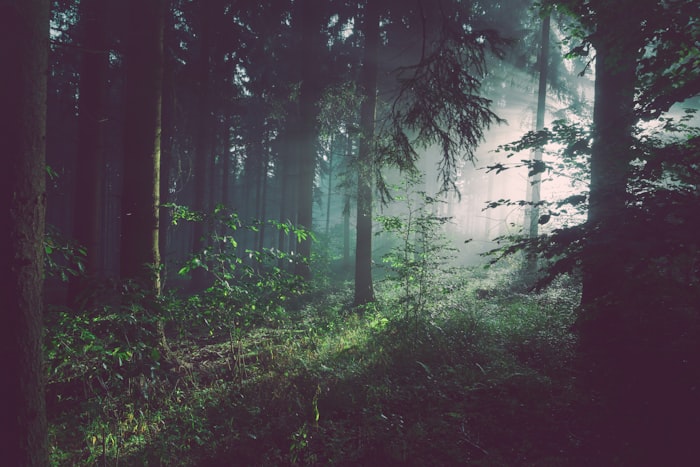
Forest reserve

A protected forest corridor in the Western Ghats — one of the Trust's earliest stewardship areas. The land adjoining this reserve remains in private hands, but is conserved under a voluntary agreement.

Our Principles

Six things we will never compromise on.

01
Permanence over convenience

Every stewardship agreement we enter is designed to be permanent. Not subject to review. Not contingent on future funding. Not reversible if a landholder changes their mind or passes the land to heirs. We do not enter into temporary arrangements.

02
Science before sentiment

Conservation decisions at Wildlands Trust are guided by ecological data, not charismatic species or media cycles. We protect grasslands as vigorously as forests, reptiles as urgently as tigers, because the science tells us their loss matters just as much.

03
Privacy as a feature, not a limitation

Many of the landholders we work with do not wish to be publicly identified. Many of the landscapes we protect are more secure for not being widely known. We have always operated quietly. That is not a constraint. It is a choice, and it works.

04
Independent governance

The Trust's conservation mandate cannot be altered by any single individual, donor, government body, or corporate partner. The board operates independently, and the Trust's founding covenants are legally protected from amendment by any future leadership.

05
No land is too small

A 10-hectare woodland that connects two larger reserves can be more ecologically significant than a 1,000-hectare block surrounded by agriculture. We assess ecological function, not scale. Connectivity matters more than area.

06
The landholder's dignity

We never pressure, never negotiate in bad faith, and never approach a landholder with a predetermined outcome. Every conversation begins with listening. Some conversations take years before an agreement is reached. That is entirely acceptable.

Our Philosophy

Why private land matters most.

India's protected areas cover just 5% of the country. The global target is 30%. That gap — 25 percentage points — cannot be filled by government acquisition alone. The most ecologically significant land in India is privately held. Voluntary stewardship is not a supplement to formal conservation. In many landscapes, it is the only mechanism that can work.

Every covenant we register is permanent — legally binding on future owners, future governments, and future courts. Not a promise. A legal instrument.

Read the full philosophy →
How We Work

Slow, careful, irreversible.

Conservation that works is rarely fast. We take the time needed to do it right — every time, for every parcel of land.

01

Identify

Our scientists map and assess privately held land with high ecological significance — prioritising parcels that bridge gaps between formal protected areas, restore degraded corridors, or protect under-represented ecosystems like grasslands and riparian buffers.

02

Engage

We approach landholders directly, transparently, and without pressure. Every conversation begins with listening. We explain what stewardship looks like in practice, conduct a baseline ecological survey at no cost, and take as long as is needed to reach a voluntary agreement.

03

Protect permanently

Every agreement is designed to be permanent — legally binding on future owners, future governments, and future courts. We then monitor, manage, and support the land indefinitely. When it changes hands, the covenant transfers with it. The protection never lapses.

Read our full approach →
What We Protect

Every ecosystem type that India depends on.

We protect forests, grasslands, wetlands, river corridors, hill forests, and privately held farmland with conservation value. We do not restrict our work to forests — India's ecological crisis spans every biome, and conservation that ignores that is incomplete.

India's grasslands are classified as wasteland on government maps. Its riparian buffers carry no legal protection. Its hill forests are invisible to formal conservation programmes. We are protecting all of them.

See all six ecosystems we protect →
Governance

An independent board. No exceptions.

The Trust is governed by a board of independent trustees. No trustee is a donor to the Trust, nor does any trustee have a financial interest in any land the Trust manages. Independence is not a policy. It is a structural requirement.

C
Chairman, Board of Trustees

Retired IFS officer with 34 years in forest administration across Maharashtra and Karnataka. Former Principal Chief Conservator of Forests. Serves in an entirely voluntary capacity.

V
Conservation Science Trustee

Wildlife ecologist and former research fellow at the Wildlife Institute of India. Specialist in large mammal corridor ecology and landscape-level biodiversity modelling.

S
Legal Counsel & Trustee

Senior advocate specialising in environmental law and land rights. Has advised multiple national-level conservation matters before the National Green Tribunal. Serves pro bono.

A
Finance & Governance Trustee

Chartered accountant and governance specialist. Oversees the Trust's financial transparency, statutory compliance, and annual audit processes. No remuneration.

A note on anonymity. The Trust does not publish the names of its trustees, its donors, its stewardship partners, or the landholders it works with. This is not unusual in the world of private conservation — it is standard practice among serious land trusts globally, and it protects the integrity of the work. We are accountable to the land we protect, not to public visibility.
Where We Work

The landscapes that cannot wait.

Our work is concentrated in India's most ecologically significant and most threatened landscapes.

We do not work everywhere. We cannot. Conservation resources are finite and the ecological crisis is not. We have made deliberate choices about where to focus — based on biodiversity data, threat levels, corridor connectivity, and the availability of private land that could realistically be brought into stewardship.

Western Ghats

Maharashtra, Goa, Karnataka, Kerala. Our primary focus area. UNESCO World Heritage Site. Home to tigers, elephants, leopards, and over 5,000 plant species. Losing 58 km² of forest per decade.

Deccan Plateau Grasslands

Maharashtra, Andhra Pradesh, Telangana. India's most under-protected ecosystem. Home to Great Indian Bustard, Indian Wolf, and Blackbuck. Classified as wasteland on government maps.

Gangetic-Chambal Corridor

Uttar Pradesh, Madhya Pradesh, Rajasthan. Last stronghold of the Critically Endangered Gharial and the Ganges river dolphin. Critical river corridor under severe pressure from sand mining.

Eastern Himalayan Foothills

Uttarakhand, Himachal Pradesh. Climate-critical corridor for snow leopard, red panda, and Himalayan black bear. Under-represented in India's protected area network despite extraordinary biodiversity.

Protected landscape India

"Conservation is not about saving nature for nature's sake. It is about understanding that we are nature — and that what we destroy, we destroy in ourselves."

— Wildlands Trust founding charter, 1993

Wildlands Trust does not measure itself by the scale of its communications, the size of its donor base, or the number of events it hosts. It measures itself by one thing: how much land is permanently protected that would not otherwise be.

We have been doing this work quietly for over thirty years. We intend to continue doing it, in the same way, for as long as the land needs protecting — which is to say, permanently.